
LASIK with diabetes: can you have it? (2026)
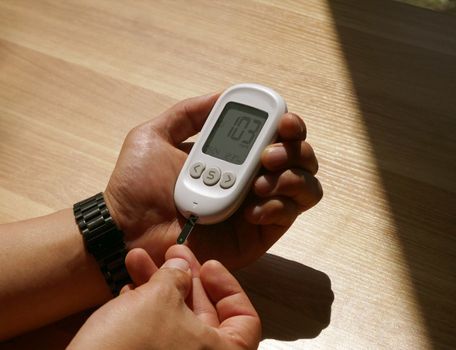
Can you have LASIK if you have diabetes?
Some people with diabetes can, but not everyone. The FDA considers diabetes a relative contraindication, meaning a reason for extra caution rather than an automatic no. The AAO lists poorly controlled diabetes among the reasons not to have LASIK.
A 2012 literature review in Clinical Ophthalmology (Simpson, Moshirfar and colleagues) concluded that LASIK may be safe in diabetic patients with tight glycaemic control and no ocular or systemic complications. It also found the evidence thin: no prospective clinical studies and only three retrospective studies. Facts on this page were checked on 1 November 2026.
Why is diabetes a concern for LASIK?
Three things matter to a refractive surgeon:
- Healing: the FDA lists diabetes, with autoimmune disease and immunodeficiency, among conditions that may prevent proper healing after surgery
- Stable measurements: swings in blood sugar can change how the eye focuses for a time, so a prescription measured on a bad day may not be your true one
- Eye disease: diabetic retinopathy, cataract and dry eye can affect vision and outcomes, and need checking first
The cornea's surface layer (epithelium) and nerves can also be more fragile in diabetes, which is why surgeons pay close attention to the ocular surface and dry eye. See dry eye after LASIK.
Who with diabetes may be suitable?
Based on the sources above, the people most likely to be considered are those whose diabetes is well controlled over time and who have no diabetic eye disease. The table summarises what surgeons typically weigh.
| Factor | More likely suitable | Less likely suitable |
|---|---|---|
| Blood-sugar control | Stable and well controlled for months | Poorly controlled or fluctuating |
| Retina | No diabetic retinopathy | Retinopathy or macular oedema |
| Prescription | Stable for at least a year | Changing |
| Ocular surface | Healthy tear film and cornea | Dry eye, corneal problems |
| General health | No other complications | Neuropathy, kidney or healing problems |
We did not find a universal HbA1c cut-off in the sources we checked. Surgeons set their own thresholds, so ask your clinic what it requires, and bring recent results from your own doctor.
What are the risks to discuss?
All the usual LASIK risks apply, and some deserve extra attention if you have diabetes. The AAO lists dryness and fluctuating vision that usually fade within a month, glare, halos and starbursts, reduced night vision, and under- or over-correction. Rare risks include infection and loss of best-corrected vision.
For people with diabetes, ask your surgeon specifically about:
- Surface healing: how they will monitor the epithelium in the first days, and what happens if it is slow to heal
- Infection: how to use antibiotic drops, and which symptoms mean you should call at once
- Dry eye: whether your tear film needs treating before surgery
- Vision changes later: how future changes from diabetes or cataract would be handled
The FDA recommends a first follow-up within 24 to 48 hours and regular checks for at least six months, which matters more if healing may be slower. Plan local follow-up with your own eye doctor before you travel; see follow-up care after returning home and LASIK side effects.
If the risks outweigh the benefit for you, staying with glasses or contact lenses is a reasonable choice. A clinic that tells you so is doing its job.
What will the pre-op exam check?
Expect the usual refractive tests plus extra attention to your retina and ocular surface:
- A dilated retina exam for diabetic retinopathy
- Corneal thickness and tomography
- Tear film and dry-eye tests
- Repeated refraction to confirm a stable prescription
- Questions about your diabetes type, treatment, recent HbA1c and any complications
Be completely open about your diabetes and medicines. Read pre-op eye exam in Korea and questions to ask your LASIK surgeon.
Is SMILE, PRK or ICL better if I have diabetes?
There is no simple rule. PRK and LASEK remove the surface layer, so healing of the epithelium takes several days and needs close monitoring. SMILE and LASIK leave the surface largely intact. ICL involves surgery inside the eye. Your surgeon will weigh your cornea, retina and control. Compare procedures in SMILE vs LASIK and LASIK vs PRK.
What if I have cataract as well?
Diabetes is linked to earlier cataract. If a cataract is affecting your vision, the AAO lists that as a reason not to have LASIK; cataract surgery with a lens chosen for your prescription may address both. Seoul cataract surgery costs about ₩1.5M–₩7.5M per eye depending on the lens, checked in 2026.
What should I do before travelling to Korea?
- Get a recent check-up and HbA1c from your own doctor and bring the results
- Send your history to the clinic before booking flights and ask if it will consider you
- Bring enough diabetes medication and supplies for the trip, plus a list in English
- Allow extra days in case the surgeon wants a second check
Use refundable bookings in case the exam shows surgery is not advisable. See am I a candidate for LASIK?
This page is general information. Your diabetes doctor and ophthalmologist should decide together.
Sources
Key facts
- FDA: diabetes is a relative contraindication to LASIK
- AAO: poorly controlled diabetes is a reason not to have LASIK
- Evidence: no prospective trials; three retrospective studies in a 2012 review
- May be suitable: tight control, no retinopathy or other complications
- Start with: a full pre-op eye exam
Related guides
Independent directory. Prices are typical ranges reported by Seoul clinics and change often. Always confirm a written quote and get a full eye exam before booking. This page is general information, not medical advice.
FAQ
Frequently asked questions
Is diabetes a contraindication for LASIK?
It is a relative contraindication according to the FDA, meaning extra caution rather than an automatic no. Poorly controlled diabetes is a reason not to have LASIK, according to the AAO.
Can type 1 diabetics get LASIK?
Some can, if their diabetes is well controlled and they have no diabetic eye disease or other complications. The surgeon decides after a full exam.
What HbA1c do I need for LASIK?
We found no universal cut-off in the sources we checked. Ask your clinic for its threshold and bring recent results from your doctor.
Can I have LASIK with diabetic retinopathy?
Usually not. Retinopathy is a complication that surgeons treat as a reason to avoid elective refractive surgery, and it needs managing first.
Does diabetes slow healing after LASIK?
It can. The FDA lists diabetes among conditions that may prevent proper healing, which is why surgeons monitor the cornea closely afterwards.
Planning vision correction in Seoul?
Compare clinics by district, check 2026 price ranges, and read our step-by-step planning guide for international patients.