
Corneal Cross-Linking in Korea: Keratoconus Treatment Guide
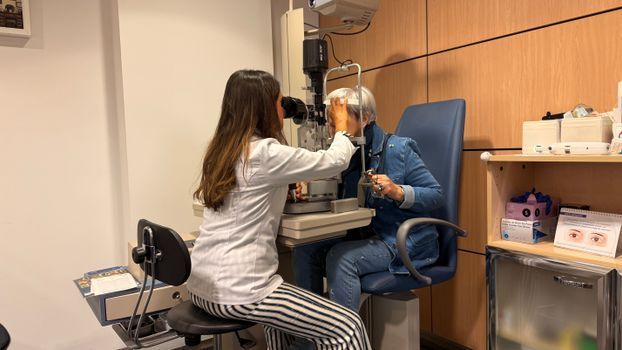
What is corneal cross-linking?
Corneal cross-linking (CXL) is a treatment that strengthens the cornea by creating new bonds between its collagen fibres. It is used to stop or slow keratoconus, a condition in which the cornea thins and bulges into a cone shape.
The surgeon soaks the cornea with riboflavin (vitamin B2) drops, then exposes it to ultraviolet-A light. The reaction stiffens the corneal tissue. In the U.S., the FDA approved the KXL system with Photrexa riboflavin for progressive keratoconus in April 2016, and for corneal ectasia after refractive surgery later that year.
Keratoconus often starts in the teens or twenties and can worsen for years, causing blurred and distorted vision that glasses correct less and less well. Treating it while vision is still good gives the best chance of keeping that vision.
Who needs corneal cross-linking?
CXL is mainly for people whose keratoconus is getting worse, usually teenagers and young adults. It is also used for ectasia, a rare weakening of the cornea after LASIK.
- Documented progression on repeated corneal scans
- Corneal thickness of about 400 microns or more (thinner corneas may be treated with modified protocols)
- No severe corneal scarring or active infection
Progression is usually shown by comparing corneal scans taken months apart, so bring any previous scans from home. Without them, a clinic may need to scan you twice before advising treatment.
Keratoconus is one reason a clinic may turn you down for laser surgery. Our guides to corneal thickness for LASIK and LASIK candidacy explain why, and the pre-op eye exam guide describes the scans used to detect it.
Epi-off vs epi-on: what is the difference?
In epi-off CXL the surface layer of the cornea (epithelium) is removed so riboflavin can soak in; in epi-on CXL it is left in place. Epi-off is the original, best-studied method.
| Feature | Epi-off (Dresden protocol) | Epi-on |
|---|---|---|
| Epithelium | Removed | Kept |
| Riboflavin | Every 3 minutes for 30 minutes | Varies by protocol |
| UV-A light | 30 minutes standard; accelerated versions shorter | Varies |
| Discomfort | Several days of pain and blur | Usually milder |
| Evidence | Strongest long-term data | More variable |
Accelerated protocols use stronger light for less time. Some studies show equal results; others show less stiffening. Ask your surgeon which protocol they use and why.
How much does cross-linking cost in Korea?
International medical-travel listings for Korea show approximately $1,100–$2,000 per eye (about ₩1.5M–₩2.8M) for cross-linking, checked in 2026. Several hospitals quote only on request.
The price depends on the protocol, whether both eyes are treated and how many follow-up scans are included. Keratoconus often affects both eyes unevenly, so you may need treatment in one eye now and the other later. Get a written per-eye quote. See the corneal cross-linking cost guide and the eye exam cost guide.
What happens on treatment day?
Cross-linking is an outpatient procedure that takes roughly an hour per eye with the standard protocol, under numbing drops. You are awake throughout.
- Numbing drops are applied and, for epi-off, the surface layer is gently removed.
- Riboflavin drops are applied repeatedly to soak the cornea.
- The surgeon checks that riboflavin has penetrated, and may check corneal thickness.
- You look at a light while ultraviolet-A is applied to the cornea.
- A bandage contact lens is placed, and you leave with antibiotic and other drops.
Bring someone to take you back to your hotel, as your vision will be blurred and your eye sore once the numbing wears off.
What is recovery like?
After epi-off CXL, expect pain, light sensitivity and blurry vision for several days while a bandage contact lens protects the eye. Most people return to desk work in about a week.
Vision can be worse than before for weeks and settle over several months. Plan at least a week in Seoul, use every drop exactly as prescribed, and avoid swimming and dusty environments while the surface heals. Rigid or scleral contact lenses are usually refitted once the cornea stabilises.
What follow-up is needed after cross-linking?
You will need repeat corneal scans to confirm the treatment has stopped progression, typically over the following year and then periodically. Most of this can be done by an ophthalmologist at home.
Ask the Korean clinic for a written report with your scans before and after treatment, the protocol used and the date, so your home doctor can compare future measurements. Avoid rubbing your eyes: eye rubbing is linked with keratoconus progression. If you have treatable allergies that make your eyes itch, getting them under control helps. Because keratoconus can run in families, close relatives may want a corneal scan too.
What are the risks of cross-linking?
CXL is generally safe, but the epi-off method carries risks linked to the open corneal surface.
- Infection (bacterial, fungal or viral keratitis)
- Corneal haze, usually temporary; rarely permanent scarring
- Slow surface healing
- Continued progression in a minority of eyes
Seek urgent care if pain gets worse rather than better after the first few days, or if you notice discharge or a white spot on the eye. CXL does not reverse keratoconus. If you later want sharper vision, options such as a toric ICL may be discussed once the cornea is stable. Ask an ophthalmologist about your case and read refractive surgery side effects for context.
Sources
Key facts
- Treats: Progressive keratoconus and corneal ectasia after refractive surgery
- How: Riboflavin (vitamin B2) drops plus ultraviolet-A light
- Goal: Stop or slow progression, not restore vision
- Price (2026): Approximately $1,100–$2,000 per eye; see the cross-linking cost guide
- Recovery: About 1 week of discomfort; vision settles over months
Related guides
Independent directory. Prices are typical ranges reported by Seoul clinics and change often. Always confirm a written quote and get a full eye exam before booking. This page is general information, not medical advice.
FAQ
Frequently asked questions
Does cross-linking cure keratoconus?
No. It aims to stop or slow progression. Most people still need glasses or special contact lenses afterwards.
How much does corneal cross-linking cost in Korea?
Listings checked in 2026 show approximately $1,100–$2,000 per eye (about ₩1.5M–₩2.8M). Ask for a written per-eye quote including follow-up scans.
Is cross-linking painful?
The treatment itself is done under numbing drops. With the epi-off method, the first few days afterwards are usually painful and blurry.
Can I have LASIK after cross-linking?
LASIK is generally avoided in keratoconus. Some surgeons consider a lens implant or a specialised surface treatment once the cornea is stable.
How long should I stay in Seoul for cross-linking?
Plan at least a week so the clinic can check healing and remove the bandage lens.
Planning vision correction in Seoul?
Compare clinics by district, check 2026 price ranges, and read our step-by-step planning guide for international patients.