
Getting your medical records in English from a Korean clinic
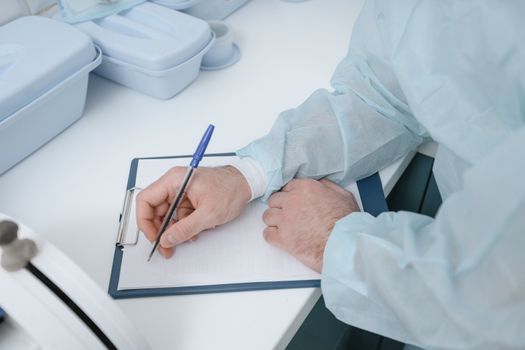
Can I get my medical records in English from a Korean clinic?
You can always get copies of your own records; whether they come in English depends on the clinic. Under Article 21 of Korea's Medical Service Act, a patient may ask to inspect or receive copies of their records, and providers should not refuse without justifiable grounds. Most charts are written partly in Korean, so ask early for an English summary or certificate as well.
Fees and procedures below come from published hospital pages, checked on 1 November 2026. Private eye clinics set their own fees and forms, so ask yours.
Which records should I ask for after eye surgery?
| Document | Why you need it |
|---|---|
| Pre-op measurements: refraction, corneal thickness and topography | Baseline for future care and any enhancement |
| Operative record: procedure, laser or lens model, settings | Essential for cataract surgery decades later |
| ICL details: lens model, size, power and serial number | Needed if the lens is ever exchanged |
| Post-op visit notes and eye pressure readings | Shows how you healed |
| Drop schedule in English | Lets your home doctor continue treatment |
| English medical certificate or summary | Insurers, employers, aviation or military examiners |
| Itemised receipts | Claims and tax records |
Pilots and service members may need even more detail; see LASIK for pilots and military.
How much do records cost in Korea?
Copies are inexpensive at the hospitals we checked; certificates cost more:
- Hanyang University Seoul Hospital: copies ₩1,000 for pages 1–5, then ₩100 per page; imaging ₩10,000 per CD or ₩20,000 per DVD; certificates ₩20,000
- SNUH Healthcare System Gangnam Center: copies ₩1,000 for one copy or ₩5,000 for up to 5, plus ₩100 per additional copy; English or Korean medical certificate ₩20,000
- SNUH main hospital: records free for most international patients; English certificate ₩20,000
Are the records translated into English?
Not automatically. Hanyang University Seoul Hospital, for example, says it does not provide translation of issued documents and that you must arrange notarised translation yourself. SNUH says its International Healthcare Center does not write English medical certificates; you ask your doctor during a consultation. An English summary is not the same as a full translation of your chart, so be clear about what you need.
Why do eye surgery records matter years later?
Because laser vision correction and phakic lenses change the eye in ways that later doctors need to know about. Three situations come up most often:
- Cataract surgery: choosing the power of a cataract lens after LASIK, SMILE or PRK is harder, because standard formulas assume an untreated cornea. Your original pre-op measurements and treatment details help the future surgeon plan.
- Enhancement or a second opinion: a surgeon considering further treatment will want your pre-op corneal thickness and topography, and what was removed.
- ICL follow-up: if your lens ever needs exchanging or removing, the model, size and power save time.
Regulators may also ask for detailed records: CASA in Australia, for example, asks for pre- and post-surgery refraction, the technique and ablation zone size. Keep a digital copy somewhere safe, alongside your passport scan. Learn more in cataract surgery in Korea and LASIK enhancement in Korea.
When should I ask for my records?
Before your last appointment, ideally at the first visit. At SNUH, an English certificate requested after your visit needs another consultation. Issuing copies can be quick, about 30–60 minutes at SNUH, but certificates depend on the doctor's schedule. Tell the clinic on day one that you need records in English at the end of your stay.
What if I have already left Korea?
It is harder. Hospitals usually expect you to request records in person with photo ID, and a proxy can collect them with signed forms. SNUH lists: the proxy's ID, a copy of the patient's ID, and a consent form and authorisation form signed by the patient. Hanyang University Seoul Hospital provides English versions of its application, consent and power of attorney forms, requires them handwritten and signed, and starts processing only after payment by bank transfer. Overseas patients can contact its international centre by email.
Private clinics vary. Ask before you go whether they will email or courier an English summary later, and at what cost.
What format should I ask for?
- Paper copies of the key pages, stamped by the clinic
- A PDF by email for your doctor at home
- Corneal scans and imaging on CD or USB if possible
- An English summary signed by the surgeon
What will my doctor at home need?
At minimum: what procedure was done and when, your pre-op and post-op prescription, the drops and schedule, and any complications. Share it at your first local check. See follow-up care after returning home, eye drops after LASIK and what to bring to your Korean eye surgery. If you have a problem obtaining records, the Medical Korea call center (1577-7129) can help; see medical interpreters in Seoul.
This page is general information, not legal advice. The law and each provider's instructions apply.
Sources
- Seoul National University Hospital – Issuance service: medical records
- SNUH Healthcare System Gangnam Center – Medical records and certificates
- Hanyang University Seoul Hospital – Medical record copies
- Korea Experience – Medical records for international patients in Korea (Medical Service Act, Article 21)
- KHIDI – Medical Korea Information Center
Key facts
- Your right: Medical Service Act Article 21 – inspect and copy your own records
- Copies: often about ₩1,000 for the first 5 pages at hospitals we checked
- English certificate: about ₩20,000, written by the doctor
- Proxy: signed consent and authorisation forms plus ID copies
- Back home: follow-up care after returning home
Related guides
Independent directory. Prices are typical ranges reported by Seoul clinics and change often. Always confirm a written quote and get a full eye exam before booking. This page is general information, not medical advice.
FAQ
Frequently asked questions
Do I have a right to my medical records in Korea?
Yes. Article 21 of the Medical Service Act lets patients inspect or receive copies of their records, and providers should not refuse without justifiable grounds.
Will a Korean eye clinic give me records in English?
Many clinics that treat foreign patients provide an English summary or certificate, but copies of the chart itself are often in Korean. Ask before surgery.
How much does an English medical certificate cost in Korea?
At the hospitals we checked, about ₩20,000. Copies of records cost much less, often about ₩1,000 for the first pages.
Can someone collect my records after I leave Korea?
Usually, with signed consent and authorisation forms, ID copies and the proxy's own ID. Forms vary by provider, so ask for them before you leave.
Why do I need my LASIK records later?
Your pre-op measurements matter for future cataract surgery and any enhancement, and regulators or employers may ask for them.
Planning vision correction in Seoul?
Compare clinics by district, check 2026 price ranges, and read our step-by-step planning guide for international patients.