
LASIK with astigmatism: can it be corrected? (2026)
Can LASIK correct astigmatism?
Yes. LASIK corrects regular astigmatism in the same treatment as nearsightedness or farsightedness, typically up to about 6.00 D depending on the laser. The AAO lists astigmatism among the errors LASIK treats, and severe astigmatism among the reasons not to have it.
Astigmatism means the cornea or lens is curved more steeply in one direction than the other, so light focuses unevenly and vision is blurred or stretched at every distance. The excimer laser reshapes the cornea more along one axis than the other to even out the curve. See astigmatism for the condition itself. Ranges on this page were checked on 1 November 2026.
How much astigmatism can each procedure treat?
The answer differs by procedure and device. The figures below are published US ranges; ranges approved in Korea can differ, so ask which laser or lens your clinic uses.
| Procedure | Astigmatism range | Notes |
|---|---|---|
| LASIK | Up to about 6.00 D | Varies by excimer laser; corneal thickness can lower it |
| SMILE (ZEISS VisuMax, US) | 0.75 to 3.00 D | With −1.00 to −10.00 D of myopia |
| LASEK / PRK | Similar lasers to LASIK | No flap; slower recovery |
| Toric EVO ICL (US) | 1.00 to 4.00 D | With −3.00 to −20.00 D spherical equivalent |
Is my astigmatism regular or irregular?
This is the most important question, and only corneal imaging can answer it. Regular astigmatism has a symmetrical shape that lasers can treat predictably. Irregular astigmatism, most often from keratoconus or a corneal scar, does not follow that pattern.
The AAO lists keratoconus and corneal scars or disease among the reasons not to have LASIK, because removing tissue from an already weak cornea can make it worse. If your topography shows early keratoconus, your surgeon may discuss corneal cross-linking or keratoconus treatment instead. Read keratoconus for warning signs such as frequently changing astigmatism.
Is SMILE or LASIK better for astigmatism?
Both can work well within range. LASIK covers a wider range of cylinder, while SMILE's US range stops at 3.00 D and does not treat hyperopic astigmatism. SMILE avoids a corneal flap, which some people prefer for contact sports or dry eye. Compare them in SMILE vs LASIK in Korea.
With any laser, aligning the treatment to the correct axis matters: small errors in alignment leave some astigmatism behind. Ask how the clinic measures and aligns the axis on its laser.
How is astigmatism measured before surgery?
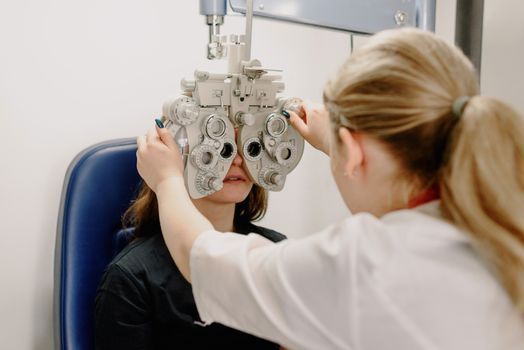
Several tests are combined, because each shows a different part of the picture. A refraction gives the cylinder and axis you see through. Corneal topography or tomography maps the front (and, with tomography, the back) of the cornea, showing whether the astigmatism is regular and how much comes from the cornea. Comparing the two tells the surgeon whether some astigmatism comes from the lens inside the eye, which a corneal laser treatment would not address in the same way.
Expect repeated measurements, sometimes on more than one day, to make sure the axis and amount are consistent. Contact lenses distort these maps, which is why the FDA advises stopping toric soft lenses at least 3 weeks before the evaluation; see contact lens break before LASIK.
Who is not a good candidate?
Astigmatism itself rarely rules you out. The AAO lists these reasons not to have LASIK:
- An unstable or changing prescription
- Extreme myopia, hyperopia or astigmatism
- Severe dry eye, or corneas that are too thin
- Corneal scars or disease, including keratoconus
- Advanced glaucoma, or a cataract affecting vision
- A history of certain eye infections, or poorly controlled diabetes
If any apply, ask about alternatives in am I a candidate for LASIK?
When is toric ICL a better choice?
A toric ICL is often discussed when astigmatism comes with high myopia, or when the cornea is too thin to remove more tissue. The lens is placed inside the eye in front of your natural lens, so no corneal tissue is removed. It must sit at the right angle, and a lens that rotates may need repositioning. See toric ICL in Korea and toric ICL vs LASIK for astigmatism.
Will I still have some astigmatism after surgery?
Possibly. The AAO notes that vision may be under- or over-corrected after LASIK, and this can often be improved with glasses, contacts or a further laser treatment. The FDA says vision can take three to six months to stabilise, so early measurements are not final. Ask whether an enhancement is included if residual astigmatism remains.
What should I ask the surgeon about my astigmatism?
- Is my astigmatism regular, and what does my corneal tomography show?
- Is it mostly corneal or from the lens inside the eye?
- Which procedure covers my full cylinder, and how much cornea will remain?
- How do you align the treatment axis?
- What happens if some astigmatism is left over?
More ideas in questions to ask your LASIK surgeon.
Does astigmatism make LASIK more expensive in Korea?
For laser procedures, usually not much: Seoul prices checked in 2026 are LASIK ₩1.5M–₩2.5M for both eyes (approximately $1,100–$1,900) and SMILE ₩2.2M–₩3.2M for both eyes. A toric ICL costs more, around ₩5M–₩7.5M for both eyes. Confirm what the quote includes. See cost of LASIK in Korea and cost of toric ICL in Korea.
This page is general information. A full exam and an ophthalmologist's advice are needed before any decision.
Sources
Key facts
- LASIK: regular astigmatism up to about 6.00 D, depending on the laser
- SMILE (ZEISS, US): 0.75 to 3.00 D
- Toric EVO ICL (US): 1.00 to 4.00 D cylinder
- Not suitable: irregular astigmatism from keratoconus
- Compare: toric ICL vs LASIK for astigmatism
Related guides
Independent directory. Prices are typical ranges reported by Seoul clinics and change often. Always confirm a written quote and get a full eye exam before booking. This page is general information, not medical advice.
FAQ
Frequently asked questions
How much astigmatism can LASIK correct?
Typically up to about 6.00 D, depending on the laser. Your corneal thickness and shape can lower that limit, so your exam decides.
Can SMILE treat astigmatism?
Yes. In the US, ZEISS lists 0.75 to 3.00 D of astigmatism alongside myopia. Higher astigmatism usually means LASIK, surface laser or a toric ICL.
Can you have LASIK if you have keratoconus?
No. The AAO lists keratoconus among the reasons not to have LASIK. Cross-linking or specialist lenses may be options instead.
Will astigmatism come back after LASIK?
Corneal astigmatism treated with LASIK is usually stable, but some can remain or return. Changing astigmatism after surgery should be checked for corneal problems.
Is LASIK with astigmatism more painful?
No. The procedure is the same with a different laser pattern. Most people feel pressure and mild discomfort for a few hours afterwards.
Planning vision correction in Seoul?
Compare clinics by district, check 2026 price ranges, and read our step-by-step planning guide for international patients.